The AgTech, which uses biosignals and artificial intelligence to know the state of crops in real time, has a presence in more than 25 countries. Its Global CEO and partner is the Argentinian Fernando Derossi, who took over this year to lead a new stage of growth for the company.
Vivent Biosignals, a Swiss AI-native company specializing in agricultural intelligence, has begun operations in Argentina as part of its international growth strategy. The company chose the country as a starting point to expand its presence in Latin America, a region where it sees opportunities to apply its technology in both agricultural production and research and development.
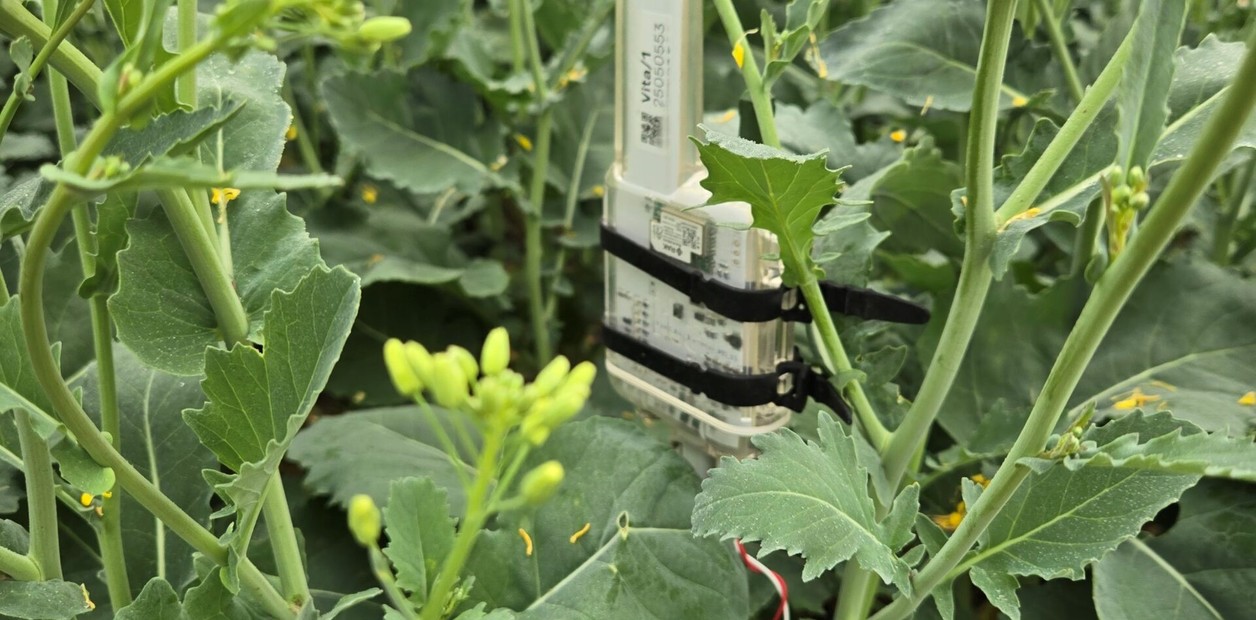
Vivent operates on an unusual premise in agricultural monitoring: it gives plants and crops a voice using sensors that directly interpret the plant to obtain information. Its biosensors capture the electrical signals they produce, and artificial intelligence models process them to identify changes associated with water stress, temperature, diseases, pathogens, or nutritional deficiencies.
These changes can appear several days before the problem becomes visible, allowing for decisions to be made in advance that are normally made when the crop has already begun to show symptoms.
“Argentina has a rare combination of factors: agricultural scale, crop diversity, technical expertise, and producers accustomed to incorporating technology. For Vivent, it’s a strategic market in itself, but also a natural starting point for growth in Latin America,” said Fernando Derossi , Global CEO and partner of Vivent Biosignals. “The opportunity lies in understanding what’s happening inside the plant before the problem translates into a visible loss,” he added.
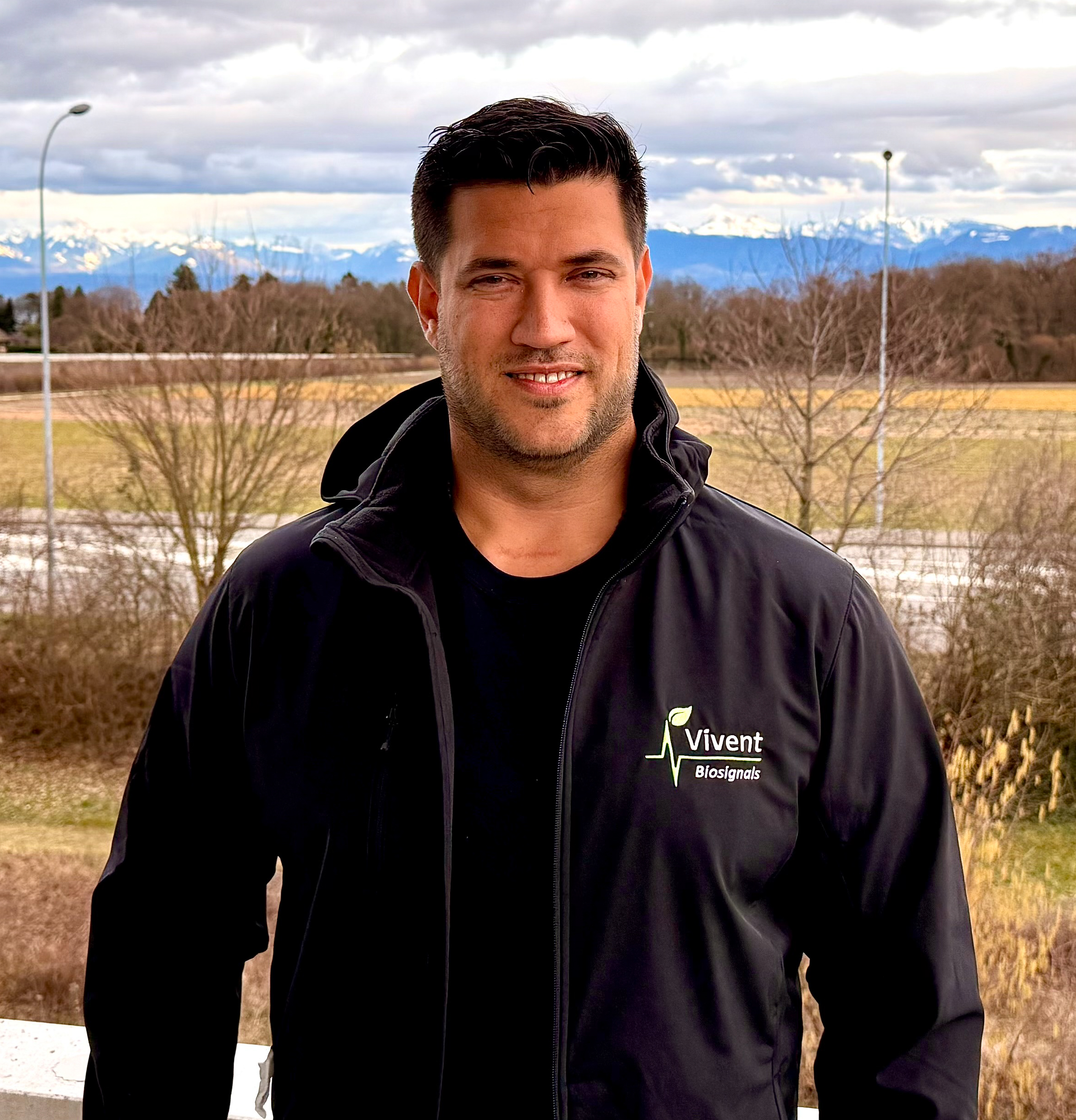
Argentinean with over two decades of experience in agricultural technology, Derossi assumed the role of CEO and partner at Vivent earlier this year. Throughout his career, he has held leadership positions at global companies such as Syngenta and BASF. As an entrepreneur, he spearheaded the development and scaling of agtech and fintech companies in Latin America, the United States, and Europe. His appointment followed an $8.6 million investment round, announced in late 2025 and backed by Agri Investment Fund, Horticoop, Pymwymic, and Swiss private investors, aimed at accelerating the company’s global and commercial expansion.
From looking at the crop to reading its signs
Vivent’s technology can be used in open fields, greenhouses, and controlled production environments. The sensors are placed on the plants themselves and transmit signals for processing in the cloud. There, the company’s developed models transform the data into indicators that can be viewed on a dashboard and integrated with other platforms via an API.
For a grower, this can mean increased yields and reduced costs by monitoring the overall health of the crop, measuring real-time symptom response, and optimizing the timing and amount of water and inputs applied to adjust irrigation or the action plan based on what the plant is actually showing. For a seed, fertilizer, biological, or chemical company, the same signals allow for comparing treatments, evaluating varieties, or generating real-time evidence in trials or direct production without waiting for a full growing season.
Among the crops in which the technology has already been tested (and is already being commercialized in almost all intensive and extensive crops) in Argentina, clear potential is observed in fruit and vegetables, such as tomatoes, table grapes and vineyards, soft fruits, citrus fruits, apples, pears, potatoes, and in extensive crops such as soybeans and corn. The platform was also validated through controlled trials in conjunction with institutions such as Agroscope and Wageningen University & TomatoWorld in the Netherlands.
“Much of precision agriculture was built on measuring the soil, the weather, or crop images. All of that remains valuable. We’ve added the plant itself as a source of information,” Derossi noted. And elaborating on the most recent developments, he explained that “by combining this continuous flow of biosignals with artificial intelligence, we can begin to move from detecting a problem to anticipating it and, increasingly, recommending how to address it.”
The company has the world’s largest database of monitored crop days, with over 35 patents for decoding plant language. The sheer volume of data collected is a cornerstone of Vivent’s AI-native strategy. The company recently surpassed 2 million real-time monitored plant days, encompassing diverse crops and production environments. This vast database of biosignals is then used to train and develop a new generation of predictive tools.
Among the products under development is a new mobile and web experience that will centralize all crop monitoring, alerts, and recommendations in a single interface. The project plans to connect the application to Vivent’s data lake, external sources, and other company products, with a logic geared not only to display information but also to suggest specific actions, measure their progress, and provide return on investment calculations for each producer.
The arrival in Argentina marks a new chapter for Vivent in the region. From this country, the company will seek to extend a technology it has been developing and validating in multiple international markets to one of the world’s leading agricultural production areas.

This article has been translated.
Source: Clarin