Carrol Plummer featured in 20 CEOs. 20 Opinions! Read more about her insights on leadership, AI in agriculture, and driving sustainable change. Discover the full German article here: Article.
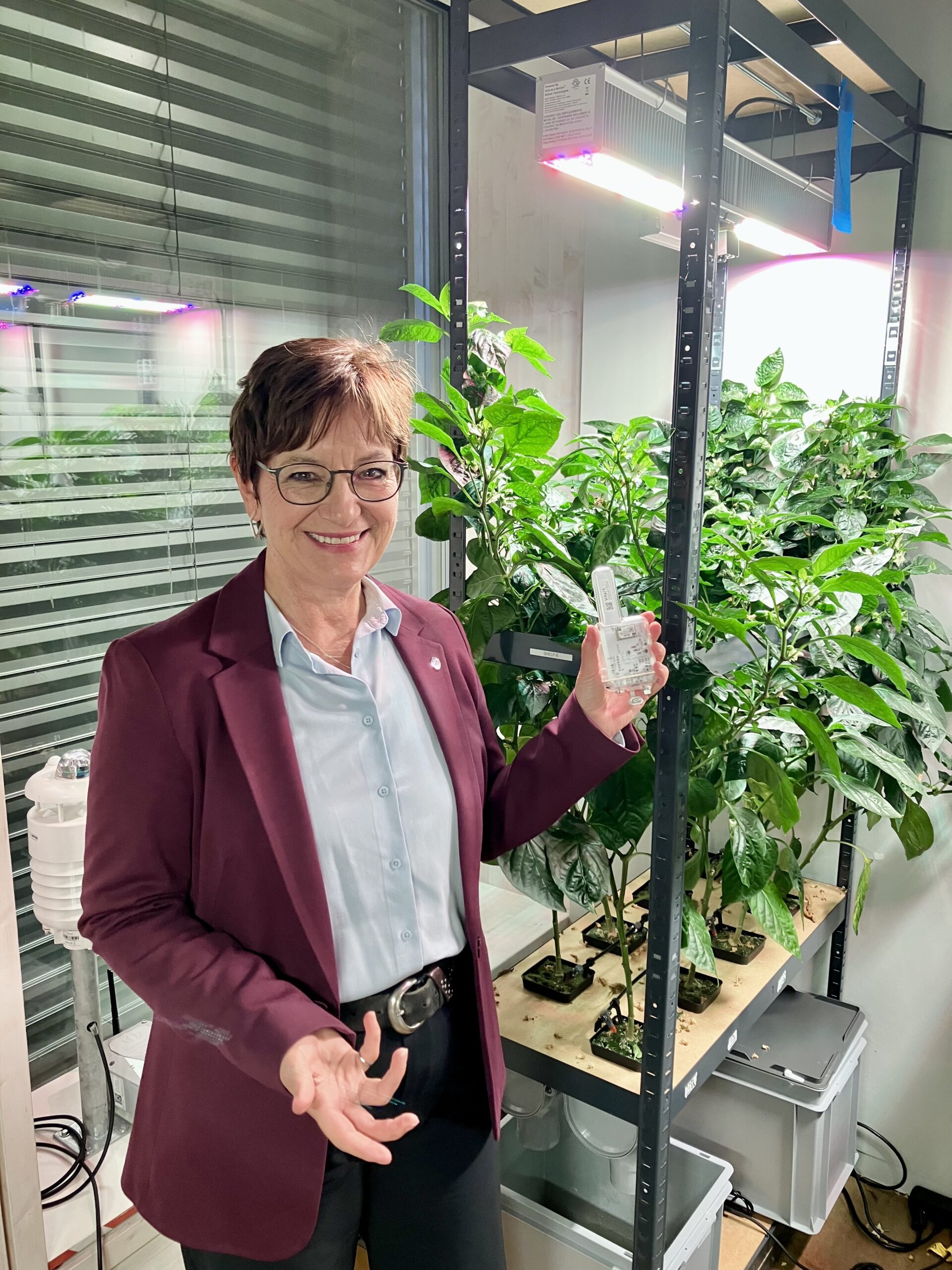
Q: Vivent works with biological signals that are invisible to the human eye. What personally drew you to working at this intersection of technology and the human experience?
A: “I have always had a deep interest in understanding how things work, particularly information networks. Vivent Biosignals was founded when we realised that studying, how living systems use information to thrive, could create real benefits for both human and plant health. We initially explored information networks in the human body. If you cut your hand, it is not your brain that decides how to heal the wound. The response is driven by complex, decentralised cell-to-cell communication. That insight led us to plants, where similar signalling networks offered a powerful opportunity to make agriculture more efficient and sustainable.”
Q: Artificial intelligence is often reduced to efficiency and automation. Where do you see its greatest value beyond these traditional use cases?
A: “Understanding how other living organisms use information opens extraordinary opportunities for learning. In terms of biomass, plants are by far the most successful inhabitants of Earth. They have evolved sophisticated ways to adapt to climate variability, defend themselves against pests and disease, and optimise scarce resources such as water and nutrients. We are at the very beginning of interpreting this biological language, and what we are learning has the potential to fundamentally transform agriculture.”
Q: You focus strongly on the use of AI in agricultural contexts. Why is agriculture such a compelling area for technological innovation?
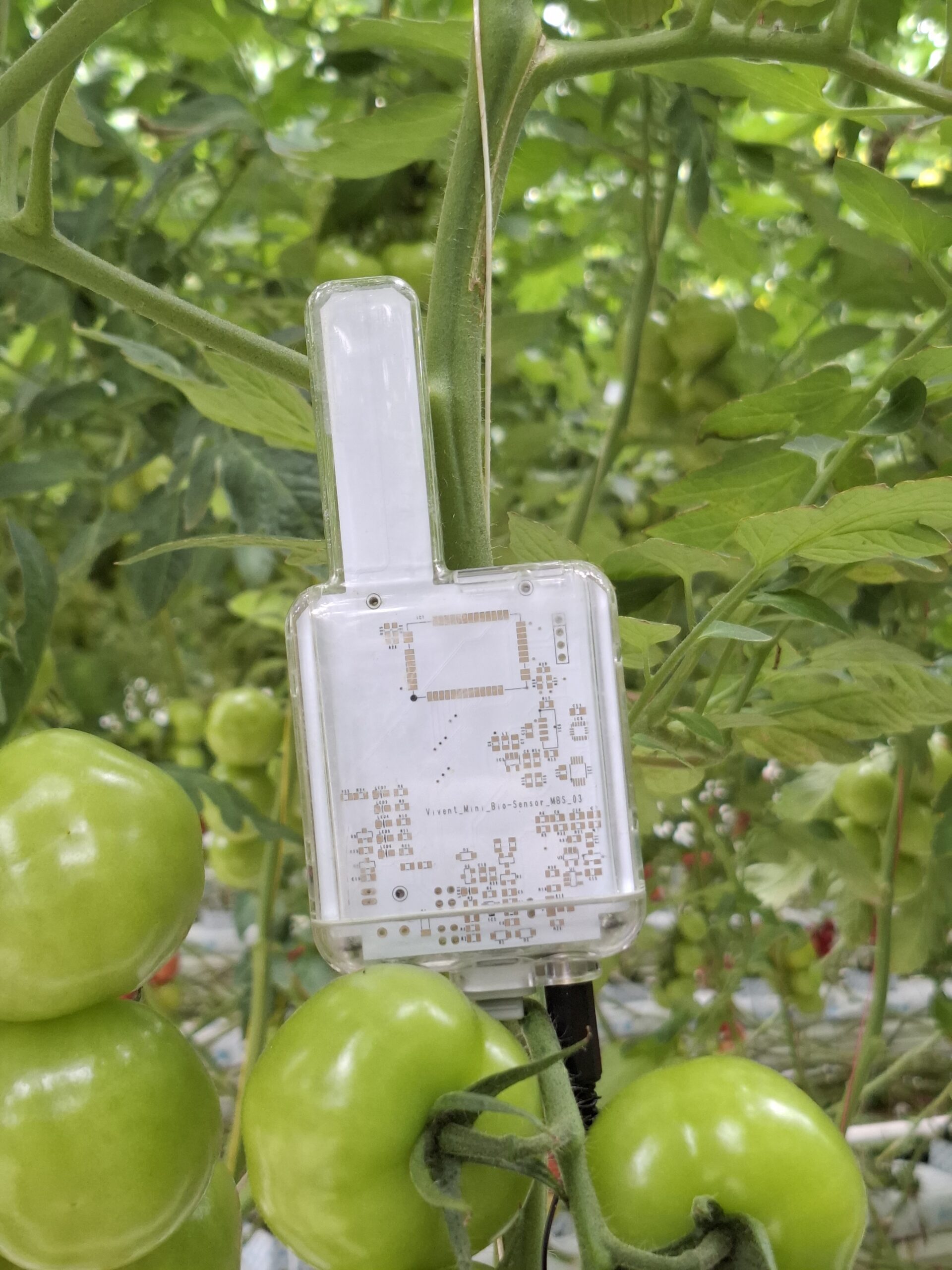
A: “The way we grow plants has changed surprisingly little over thousands of years. Even today, the best growers rely heavily on their senses—sight, smell, touch, taste, and intuition—to assess crop health. By accessing the internal information systems plants use to regulate growth, reproduction, and defence, we can augment farmers’ understanding in a completely new way. Our technology delivers real-time insights, effectively creating wearables for plants that provide continuous crop health data on any connected device. Although plant signalling networks have been known for over a century, only recent advances in computing and AI have made them interpretable at scale. This is now enabling meaningful gains in yield, water efficiency, and fertiliser optimisation for Vivent Biosignal’s clients. Given agriculture’s impact on land use, water consumption, and pollution, even modest efficiency improvements can have outsized environmental benefits.”
“Sustainable agriculture begins with understanding plant intelligence.”
Q: Being a CEO often means making decisions under uncertainty. Was there a moment that fundamentally shaped how you approach leadership?
A: “Early in my career, I had the opportunity to help define a company’s vision and mission. That experience showed me the difference between pursuing incremental improvement and aiming for genuine transformation. The scale of the ambition profoundly influences creativity and problem-solving. Since then, I have come to enjoy leading teams through periods of deep change. These are demanding environments, but they are also where people often achieve outcomes they did not believe were possible. Supporting teams as they expand their sense of what can be achieved is one of the most rewarding aspects of leadership.”
Q: Sustainability is widely discussed in technology. What does sustainable AI mean in the day-to-day reality of running a company?
A: “Vivent Biosignal’s strategy is built around making agriculture more sustainable, but we also apply sustainability very pragmatically within our own operations. That starts with data discipline—using less data rather than more. We are deliberate about energy- and cost-aware AI choices, including selecting appropriately sized language models to deliver client value without unnecessary computational overhead. We also rely heavily on human-in-the-loop approaches. Our primary data source—plant biosignals—requires time to become fully trusted and explainable to farmers and advisors, and that trust must be earned carefully..”
Q: The past few years have been challenging for technology-driven companies. What period did you find most demanding as a CEO?
A: “Global shocks such as Covid and the war in Ukraine disrupted agricultural supply chains and slowed our growth, but the most demanding periods are often fundraising cycles. European early-stage investment has become significantly more risk-averse over the past two decades. Investors now conduct extensive due diligence relative to investment size and place high demands on governance and control. While discipline is important, I sometimes question whether excessive caution truly improves returns. A slightly greater appetite for risk could strengthen Europe’s innovation ecosystem.”
Q: You are strongly committed to education and funding opportunities for women in technology. Where do you see the biggest barriers today?
A: “Educationally, women perform very strongly and often outperform men early in their careers. However, those gains tend to diminish at mid-career stages. Strong mentorship, family-friendly workplaces, and more inclusive investment practices are critical to sustaining momentum. Funding statistics for female- and minority-led companies clearly show that structural changes are still needed across education systems, workplaces, and the investment community. As a founder, I now prioritise investors with diverse partnerships, where conversations tend to progress more effectively.”
Q: Looking ahead, which developments in AI give you the most reason for optimism—and which concern you the most?
A: “The progress made with transformer-based language models is impressive, and there is still substantial value to be unlocked. At the same time, we should not overlook other forms of machine learning, including speech-based models that are inherently more inclusive than text. My concerns centre on privacy, data ownership, and the rapid generation of synthetic data, which risks reinforcing bias and eroding factual grounding. Beyond language models, the real opportunity lies in grounding AI in the physical world. For example, by combining large-scale plant electrophysiology data with weather, soil, and microbiome data, we can begin to map ecosystem health in entirely new ways—unlocking insights that extend far beyond human language. Overall I am excited and amazed at the speed of learning, accelerated by AI at this stage of my career and am delighted to be exploring alternative intelligences.”